
The newborn screening system is a public health legacy. This is a column from a guest contributor, Dr. Joanne Mei, who reflects on her views of the current state of the newborn screening system.

The Newborn Screening System: A Public Health Legacy
Today I have another article from a guest columnist who will provide invaluable insights into the newborn screening system here in the United States.
Newborn screening has been called one of the greatest public health achievements (source: CDC). But as I have shared previously, it is more than just a test. It is a complex system that saves lives.
I have shared this consistently since the termination of the Advisory Committee on Heritable Disorders in Newborns and Children (ACHDNC) in April of 2025. And I have tried to communicate to my community the urgency of the present moment in newborn screening advocacy.
But I recognize that I am a communications professional, and not an expert. So, I consulted a friend who is.
Dr. Joanne Mei spent 34 years at Centers for Disease Control and Prevention (CDC). From 2008 to 2025 she was the chief of the Newborn Screening Quality Assurance Program (NSQAP) at CDC, and recently retired.
The Newborn Screening Quality Assurance Program was established in 1978. It supports public health laboratories around the US and throughout the world through proficiency testing and quality control. In short, it helps state laboratories ensure that the processing of blood samples collected during the newborn screening tests at the hospital are accurate.
What good are newborn screening tests if the results are inaccurate?
Update: In October 2025, the American College of Medical Genetics and Genomics (ACMG) announced a coalition to fill the gap left by the absence of the ACHDNC. You can read more about that here.
CDC collaborates with Association of Public Health Laboratories (APHL) and state laboratories to ensure the quality of their newborn screening testing. The processing of the samples occurs in state laboratories, but as Dr. Mei states in her article, CDC provides critical support to them so that the system functions properly in pursuit of its mission: saving lives.
The babies who are saved through newborn screening grow up, live their lives, make friends, create families, go to work, and give back to this world. We contribute to society.
We are a changed generation because of newborn screening.
Dr Mei has also served as the Secretary of the International Society of Neonatal Screening (ISNS) and was a recipient of the ISNS/Revvity Guthrie Award. That award is given annually to honor an ISNS member who has made a significant contribution with global impact.
She is an expert on the newborn screening system here in the United States, and her contributions have been recognized around the world (you can read more about her credentials and experience here).
The views that she will share are her own. They do not represent any governmental agency or non-profit organization. But they are the words of a retired public servant who spent a career serving the global newborn screening system.
And I simply ask you…
Listen to what she has to say about the status of the newborn screening system.
From a Kid Who Liked Bugs to a Career in Public Health and Newborn Screening, by Joanne Mei, PhD
Newborn Screening Saves Lives. That phrase is easy to remember because it’s true. I recently retired from the Centers for Disease Control and Prevention (CDC) after 34 years of public service. For most of my career at CDC, I worked in and managed the Newborn Screening Quality Assurance Program, which directly supports state public health laboratories to ensure the results from testing newborns are accurate.
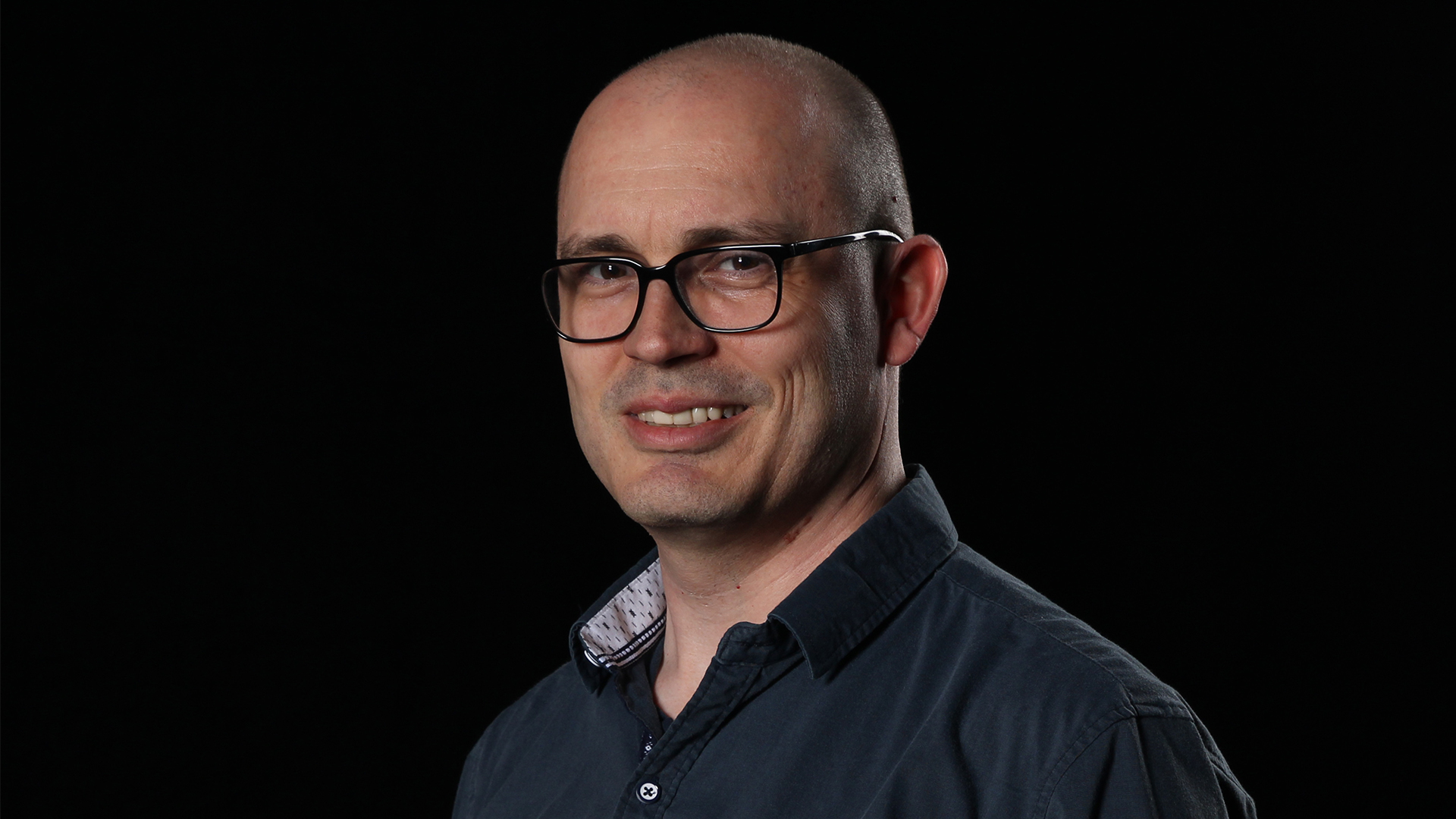
Joanne Mei, PhD (retired). From 2008-2025, Dr. Mei was the chief of the Newborn Screening Quality Assurance Program (NSQAP) at Centers for Disease Control and Prevention (CDC).
Photo credit: Gabriella Collard.
I grew up in Ludlow, Massachusetts, a small town in the western part of the state, the first-generation child of working-class immigrant parents. From bakeries, shops, and restaurants that specialize in Portuguese, Polish, Italian, and French delicacies to churches and social clubs that initially supported immigrant communities and now support their descendants and keep their cultures alive.
My parents and many of their friends fled Italy and Europe after WWII looking for a better life in the United States. Some of my relatives had immigrated even earlier in the early 1900’s. They worked hard in the paper and textile mills along the Chicopee River. They opened businesses and raised families with the traditions that they brought from the old country. I grew up learning how to cook traditional Italian food and I helped host large family gatherings for the holidays.
I attended public schools and didn’t appreciate my excellent education until I started college and found I was much more prepared than many of my classmates in science and English. I was curious about bugs and biology as a kid, often horrifying my mother when I brought something undesirable into the house. A 6th grade science teacher praised my dissection of a dead earthworm as the best he had ever seen. That simple complement spoken to a 12-year-old was enough to launch me into science and research at the University of Massachusetts, and which led me to a job at CDC.
When I joined CDC, I didn’t know what public health meant. But now, as I reflect on my life and career, public health started in my hometown. Public health works to protect and improve the health of people and their communities, which could be a neighborhood, a small town, a state, a country, or a region of the world.
We have all experienced public health in some way. I remember getting the oral polio vaccine from school nurses. I got the smallpox vaccine which was required to enter Italy when I traveled there as a small child with my parents. International public health efforts eliminated smallpox in my lifetime. My hometown’s health department helped my aging parents when they needed medical equipment, with managing medications, and with something as simple as clipping toenails. I am forever grateful to those town nurses. Maybe you have been touched by a caring public health worker who helped keep you safe form disease or supported a family member in need.
These are some visible examples of public health. Much of public health happens behind-the-scenes, and if you don’t know about it, it’s likely because the public health system is working. Newborn screening is a little known public health effort. In the United States, just about every newborn baby is screened for many genetic and metabolic diseases. You can’t tell the baby has one of these diseases at birth.
The newborn’s blood must be tested, and a tiny amount of blood is taken within 24-72 hours of life. That blood sample is sent to a state public health laboratory. The scientists at the state lab test the newborn’s blood by advanced clinical methods. If an abnormal result is found, the healthcare provider is contacted to have the baby come back for more testing and diagnosis. Time is critical because many of these diseases can lead to death or severe developmental disabilities if the baby isn’t treated quickly.
If you have children, grandchildren, or have family or friends with children, and you haven’t heard about newborn screening, it’s because the system works and the baby’s screening results were normal. Maybe you received a call telling you your baby’s newborn screening results were abnormal, and you recall the devastation and fear. Or maybe you were detected by newborn screening and have been able to live a relatively normal life because you were treated early and learned how to manage your disease.
Is the newborn screening system perfect? No, and CDC and states strive to make it better.
Until April of 2025, the Advisory Committee on Heritable Disorders in Newborns and Children advised the Secretary of Health and Human Services, currently Robert F. Kennedy, Jr, on which diseases should be tested. As part of the newborn screening system, this national committee consisting of federal and state public health staff, pediatricians, medical geneticists, researchers, representatives from professional associations, advocates, and parents reviewed scientific studies to see if there was enough evidence to justify adding a disease to a state newborn screening panel. Many factors were considered, and the process was lengthy and thorough.
Was it perfect? No, but the public health and medical professionals who reviewed the evidence put their heart and souls into making the best decisions based on available information. Under Secretary Kennedy, the committee was dissolved in early April, along with several other national scientific advisory committees.
At the same time, thousands of public health scientists were fired from CDC. You may have heard about it in the news. The firings included highly trained chemists, biologists, molecular biologists, medical doctors, statisticians, epidemiologists, policy experts, and many more. These firings and other funding cuts to the agency put newborn babies’ lives at risk. Fewer CDC scientists now support states, and fewer resources are helping states adopt new technologies to improve newborn screening tests.
Most of the money in the CDC budget goes to support state public health departments. The cuts to CDC are cuts to state programs. If states can’t accurately test newborns, they could miss a baby at risk for a devastating disease, which could kill the baby or could leave the baby with life-long disabilities if left untreated.
The newborn screening system is fraying. I have barely touched on the testing part. Not only do states test newborns but they also contact families of at-risk babies. They ensure the baby has more testing, they help with medical treatments, and they track how well the baby is doing. CDC provides critical services to states, so babies are protected.
These critical services, along with so many other activities that CDC does behind-the-scenes, are being attacked by politicians and a culture that increasingly devalues scientific expertise. The worst of this was the attack on the agency on Friday, August 8, 2025, when a gunman opened fire on the CDC campus, causing the death of a law enforcement officer, locking down the agency, a university, a daycare center with more than 90 children, and a neighborhood. The leadership of CDC was further attacked by the firing of the CDC director followed by the resignation of top CDC leaders on August 27.
Public health exists for the public and works because of the dedicated service of hundreds of thousands of civil servants who are your friends and neighbors. Public health professionals aren’t in it for the money, or because there is some big industry payoff (there isn’t).
We do it because we care. I learned to care from my humble upbringing. I learned to care from family, teachers, nurses, doctors, professors, and mentors who cared for and about me. I am proud that I care, proud of my immigrant parents, proud of my hometown, proud of my public education, which is also under attack, and proud of my career as a chemist and leader at CDC.
My heart aches that some of us have stopped caring.
CDC and the national systems that are the foundation for quality newborn screening testing are under attack. The lives of newborn babies are at risk due to political and not scientific decisions. This has ramifications for all of us, our families, and future generations.
Joanne Mei, PhD
Retired, Chief of the Newborn Screening Quality Assurance Program
Centers for Disease Control and Prevention
Atlanta, Georgia



Leave a Reply